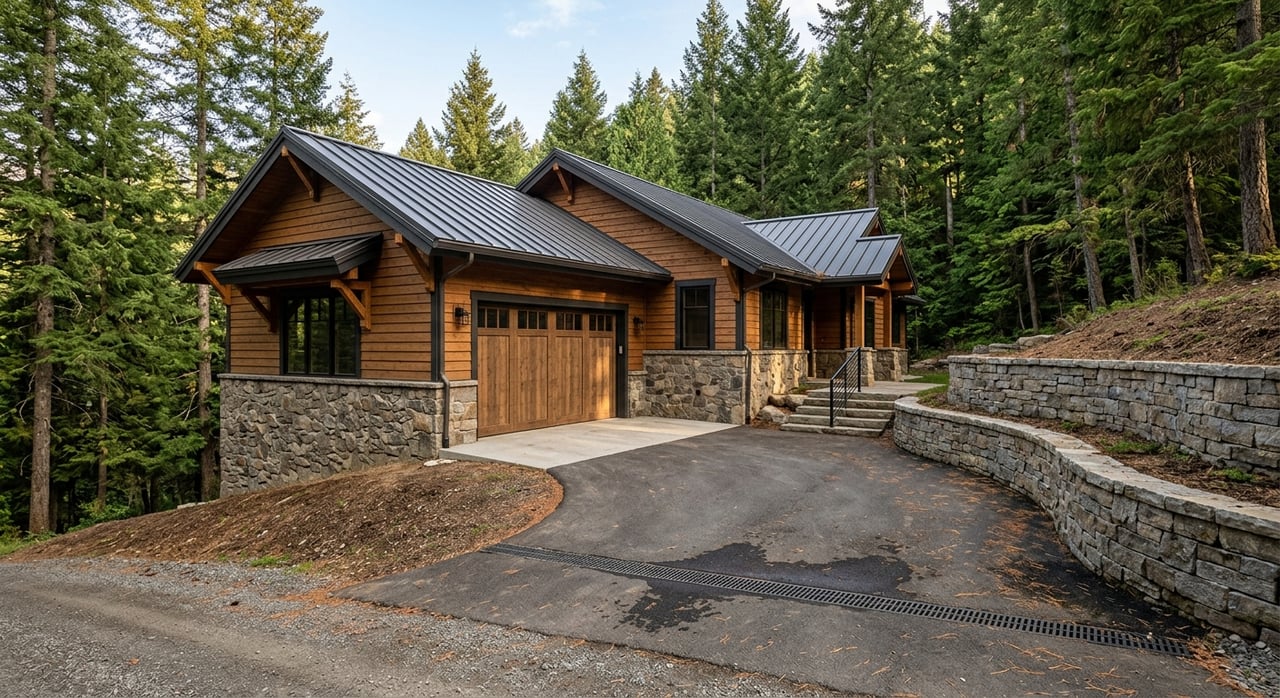
How to Build a Home in Cascade-Chipita Park
June 25, 2026
June 25, 2026
Building a custom home in Cascade-Chipita Park can be exciting, but it also comes with a learning curve that catches many buyers off guard. If you fall in love with a mountain lot and start sketching your dream floor plan too soon, you could miss important details about access, utilities, wildfire requirements, or parcel history. The good news is that with the right order of steps, you can make smarter decisions and avoid costly surprises. Let’s dive in.
In Cascade-Chipita Park, the approval path usually runs through El Paso County and the Pikes Peak Regional Building Department, not a city government. That matters because your first questions should focus on whether the parcel is truly ready for a custom build. Before you spend heavily on design, confirm the basics at the parcel level.
A strong first step is checking the El Paso County Assessor parcel records and the county Planning Projects Dashboard or EDARP system. These tools can help you verify the legal description, review parcel history, and see whether there are active or prior land-use applications tied to the property. If a lot has a complicated history, you want to know that early.
Recorded plats also matter more than many buyers expect. El Paso County treats a recorded plat as the mechanism that creates lots and blocks, which becomes especially important with raw land, split parcels, or older legal descriptions. If the lot is not already part of a recorded plat, that can affect how you plan your next steps.
Before you finalize a floor plan, try to verify these items:
This early due diligence can save you time, money, and frustration later.
Many buyers assume the building permit is the whole process. In reality, land-use review may come first if your parcel or plan needs it. El Paso County uses EDARP for early-assistance meetings, minor applications, and larger development applications.
The county’s review process is step-based, and incomplete applications can be rejected. After a completeness review, referrals are sent out, and timelines are set case by case based on the project’s complexity, staffing, and current workloads. That means it is wise to expect a variable timeline rather than count on a fixed turnaround.
If your project requires a hearing, the process can take another layer of planning. For certain applications, mailed notice must go out at least 15 days before the hearing, and final action may rest with the Planning Commission, Board of County Commissioners, or Board of Adjustment, depending on the request.
For custom home construction in this area, building permits run through Pikes Peak Regional Building Department. PPRBD serves unincorporated El Paso County and has adopted the 2023 Regional Building Code, which implements the 2021 IBC and IRC framework along with related codes.
Most construction projects require plan review before permit issuance. PPRBD also encourages homeowners to discuss plans with a code official before starting, since that can save time and money. In practical terms, that means your plans should be shaped by site conditions before they are treated as final.
Utilities in mountain areas often need more coordination than buyers expect. In Cascade-Chipita Park, water supply, wastewater, and fire-water planning should be considered as one package instead of three separate tasks. If one piece does not work, the overall build plan may need to change.
If the lot is not served by municipal wastewater, El Paso County Public Health regulates onsite wastewater treatment systems, or OWTS. As of January 1, 2024, OWTS permit applications must be submitted by a licensed OWTS installer. That makes it important to bring the right professionals into the process early.
For water supply, a new well that diverts groundwater requires a permit through Colorado’s Division of Water Resources. The agency says complete new or replacement well permit applications can take up to 49 days to review. If you plan to rely on a private well, build that timeline into your overall schedule.
Private well ownership also comes with ongoing responsibility. Colorado public health guidance notes that private wells are not regulated under the Safe Drinking Water Act, so owners should plan for testing and maintenance. That is another reason to think through long-term ownership costs, not just construction costs.
In areas without a municipal-type water system, El Paso County fire code says fire-water planning follows NFPA 1142 and may involve fire cisterns or other approved systems. For certain projects, the county also requires a Fire Protection Report that addresses water supply and code compliance.
This is one of the clearest examples of why mountain custom builds need coordination from the start. Your house design, utility plan, and fire readiness plan all influence each other.
A beautiful lot is not enough if access is difficult, limited, or expensive to improve. In mountain settings, road and driveway details can shape both cost and buildability. This is especially true if the parcel depends on a private road or needs work to meet county standards.
Any access to a county roadway requires a county-issued access permit. El Paso County’s access standards also address emergency access, ingress and egress, and driveway design, including a requirement that driveway access reach within 150 feet of the farthest point of a building when the building sits more than 150 feet from a road.
The standards also cover practical design issues like width, grade, turning, and clearance. Those items can affect where you place the home, garage, and turnaround areas. A floor plan that looks perfect on paper may need to be revised once real access requirements are mapped out.
If your lot depends on a private road, ask more questions, not fewer. El Paso County notes that upgrading or converting a private road to county maintenance can be expensive and complicated, potentially involving survey work, engineering, drainage, stormwater review, geotechnical work, environmental review, road design upgrades, and support from all parcels using the road.
The county also notes that gravel roads are generally expected to remain gravel and gives a rough conversion cost of about $1 million per mile. Even if you are not planning a full road conversion, that figure helps show how site-sensitive mountain access can be.
Wildfire planning is a major part of building in this area. In Cascade-Chipita Park, wildfire exposure is not something to review at the end of the process. It should be part of your early feasibility review.
El Paso County’s wildfire policy says staff currently use the vegetation map to determine whether a wildland fire and hazard mitigation plan is required until the county adopts the Colorado Wildfire Resiliency Code map. When required, that plan must be prepared by a qualified professional and address items such as hazard rating, fuel inventory, slope and aspect, defensible space, structure hardening, and implementation and maintenance responsibilities.
The same policy states that the 2025 Colorado Wildfire Resiliency Code goes into effect on July 1, 2026, and will apply to buildings and structures in the wildland-urban interface. The county’s rules also state that no development permit may be approved or issued without compliance with the applicable fire and wildfire section.
In a market like Cascade-Chipita Park, the real challenge is not just designing a beautiful home. It is coordinating parcel feasibility, access, well planning, OWTS requirements, fire-water needs, wildfire mitigation, and county review in the right order.
That is why a mountain-experienced builder can bring real value to the process. You want a team that understands how these pieces fit together before construction begins, not after plans are locked in.
If you are planning a custom home build here, the order of your decisions matters. Rushing to final design before you understand the lot can lead to redesigns, delays, or budget changes.
A more practical sequence looks like this:
This approach helps you solve the site first and design around real conditions.
If you are buying land for a custom build, it helps to think beyond views and acreage. The most successful projects usually begin with careful due diligence, realistic timelines, and a clear understanding of county processes. That can make the difference between a smooth build path and a long list of avoidable setbacks.
For buyers considering mountain lots, local guidance can be especially valuable because every parcel tells a different story. Some are straightforward. Others require deeper review around access, utilities, wildfire planning, or land-use history before you can move forward with confidence.
If you are exploring lots or planning a custom home in the area, Thetford Team Real Estate can help you evaluate land, understand the local process, and take the next step with more clarity.
Stay up to date on the latest real estate trends.


Get assistance in determining current property value, crafting a competitive offer, writing and negotiating a contract, and much more. Contact us today.