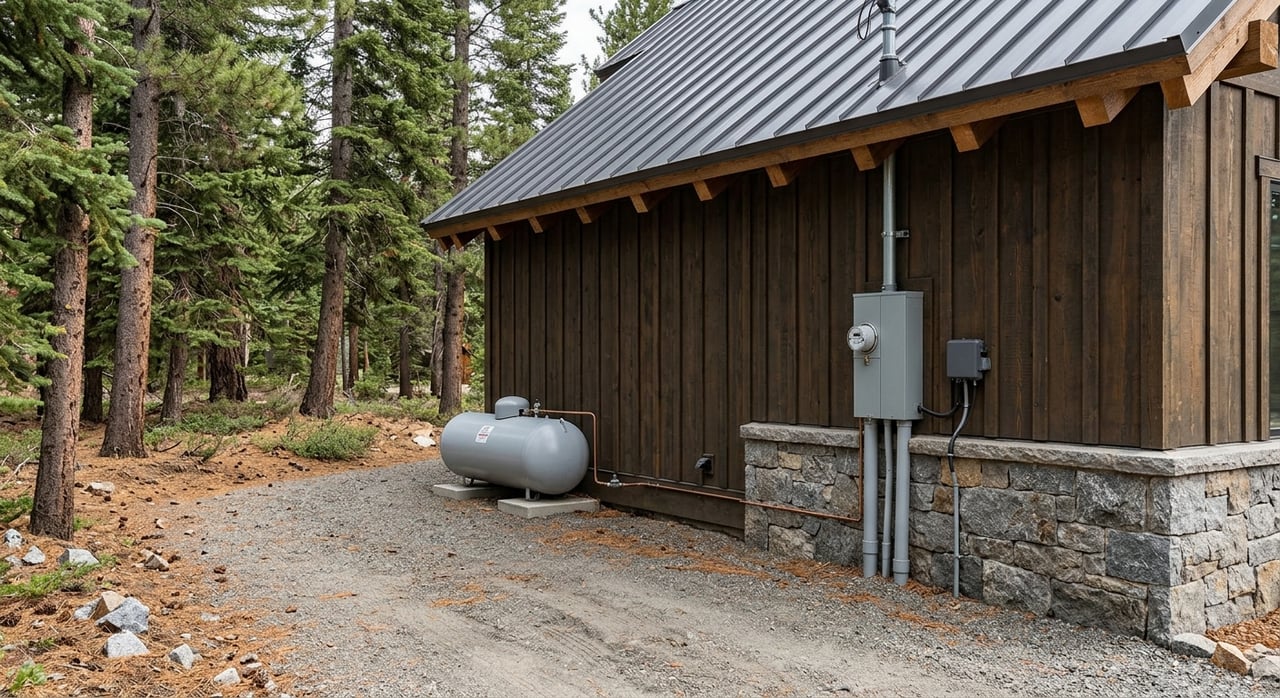
Buying Acreage in Divide CO: What Mountain Land Requires
May 21, 2026
May 21, 2026
Wondering if buying acreage in Divide is your shortcut to mountain freedom? It can be, but only if the land actually works for the way you plan to use it. Before you fall in love with the views, you need to know how the parcel is accessed, how water and wastewater will be handled, and what Teller County will allow. Let’s dive in.
In Divide, acreage is rarely a simple land purchase. It is a systems purchase, where access, utilities, wildfire readiness, and zoning all shape how usable the property really is.
That matters because one parcel can feel very different from another, even if both share a Divide address. Teller County’s land-use, road, and permit resources make it clear that buyers should verify the exact property rather than assume the same conditions apply across the area.
A beautiful homesite does not help much if getting to it is difficult in winter or expensive year-round. In Teller County, road type and condition can affect daily convenience, emergency access, and long-term maintenance costs.
The county classifies roads as principal arterial, minor arterial, collector, local, and “other.” It also notes that “other” roads were not built to county standards and, until upgraded, receive only emergency access and maintenance.
That is a big deal in a county with about 560 miles of roads, including 484 miles of gravel. In practical terms, unpaved access is common, and the condition of the final stretch to your property may matter as much as the parcel itself.
If a property is served by a private road or a road that is not county-standard, slow down and dig deeper. You will want to understand who maintains it, what winter access looks like, and whether the approach is dependable in snow, mud, or freeze-thaw conditions.
This is especially important if you plan to live there full time, visit often in winter, or need dependable access for construction. A parcel can look affordable at first glance, then become much more expensive once road work and ongoing maintenance are added in.
In mountain areas, the driveway is not just a path to the house. It is part of the property’s core infrastructure, and Teller County regulates it accordingly.
The county requires a driveway access permit before a building permit, and the rule applies countywide. The county also notes that inspection and processing typically need five working days.
Homeowners are responsible for maintaining driveways, culverts, and parking areas. Teller County also says it is illegal to push driveway snow or gravel into the county right-of-way.
Teller County’s driveway guidelines regulate width, grade, and turn radii. Most residential accesses are limited to about 20 feet in width, and gates must sit at least 30 feet from the roadway.
For buyers, that means a long or steep driveway can turn into a real engineering and construction cost. Turnarounds, drainage, slope, and usable parking space should all be part of your evaluation before you move forward.
One of the biggest mistakes acreage buyers make is assuming all rural properties work the same way. Around Divide, water and wastewater options can vary sharply from one parcel or subdivision to the next.
Some properties may have access to a community provider. Others may rely on a well, cistern, hauled water, or another approved setup. The right answer depends on the exact parcel.
Divide does have a community water option. Divide Water Providers describes itself as a privately owned community water system regulated by the Colorado Department of Public Health and Environment, and it also operates a water haul station on North Hybrook Road.
That can be useful context when you are comparing raw land or homes on acreage. A nearby utility line or haul option can change the practicality of a property, but you still need to verify whether your specific parcel can connect.
Nearby subdivisions can also have their own systems. For example, Highland Lakes Water District, northwest of Divide, serves a subdivision system with 23 wells, 13 miles of water lines, and 367 residences tapped into the system.
Wastewater is county-regulated through OWTS, or onsite wastewater treatment systems. Teller County’s permit materials show that buyers need parcel-specific information such as a soils analysis report, a site plan, and the property marked at the road with an address sign.
The permit form also asks whether the water supply will be a private well, cistern, spring, or community provider. That is a good reminder that water and septic decisions are connected, and both need to be reviewed early.
If a parcel will need a new well, Colorado’s Division of Water Resources says a new well permit is required for any new well that diverts groundwater. The agency also says complete application review can take up to 49 days.
That timeline matters if you are trying to plan a build, line up contractors, or close quickly on land. It is smart to confirm the permit path early and ask whether any additional rules apply to the area involved.
Utilities in Divide are real, but they are not uniform across acreage tracts. Before your contingency deadlines end, verify the exact provider and ask whether line extensions or service-construction work will be needed.
That one step can save you from expensive surprises later.
Black Hills Energy’s Colorado gas tariff lists Divide and Woodland Park in its natural-gas service territory. That means some parcels in and around Divide may have natural gas available, while others may not.
Black Hills also notes ongoing work to modernize substations and critical lines into Teller County. Even with service in the broader area, buyers still need to confirm the exact service point for the property they want to buy.
Internet is highly address-specific in Divide. AT&T says it offers wireless home internet in Divide using its 5G network, but coverage is not available everywhere.
Hughesnet says it is available in Divide with plans up to 100 Mbps, with satellite latency as part of the tradeoff. Teller County’s broadband planning also shows that internet access has long been treated as a countywide development issue.
If you work from home, stream often, or need dependable access for a second home, verify service early. This is one of those details that can be easy to overlook until it becomes a daily frustration.
If you are buying in Divide, wildfire mitigation is not optional background knowledge. It is part of owning and maintaining mountain property.
Teller County’s wildfire council focuses on reducing wildfire severity and frequency through mitigation and collaboration. The county’s emergency-management resources also connect residents to wildfire plans and Peak Alerts notifications.
The Colorado State Forest Service offers a practical home ignition zone checklist for homeowners. It includes using a Class A roof, clearing roofs and gutters, screening vents, maintaining a 5-foot nonflammable zone around structures, and keeping slash and woodpiles away from the home.
The bigger takeaway is simple: wildfire mitigation is ongoing maintenance, not a one-time cleanup project. If you buy acreage, you should budget time and money for that work.
Emergency readiness is not just about the house. It also depends on whether responders can find and use the property safely.
Driveway signage, turnarounds, and accessible routes matter. In mountain settings, a parcel with difficult access can affect both everyday convenience and emergency response.
Teller County also regulates burning closely. The county says Red Flag and Orange Flag warnings suspend burn-permit activation, and an open-burning permit is required for larger outdoor fires.
For Divide, the sheriff’s office is the local permit point. If outdoor burning is part of how you plan to manage slash or maintain the property, that is something to understand before you buy.
Acreage buyers often ask, “Can I build on it?” In Teller County, the better question is, “Can I use it the way I want to?”
Teller County is a zoned county, and its land use regulations have current updates. That means zoning matters just as much as acreage size.
The A-1 Agricultural district is one of the county’s main rural-use benchmarks. Teller County describes A-1 as land primarily devoted to farming, forestry, ranching, and related residential uses, with a minimum lot size of 35 acres.
But zoning is not just about minimum size. The same A-1 summary shows that some uses are allowed by right, while others require administrative, conditional, or special review.
When you review a parcel, think beyond whether a home can be built. Ask whether the zoning supports the size, number of dwellings, animals, guest use, or home business you have in mind.
Teller County’s building permit materials group driveway, septic, and single-family dwelling applications together. That is a helpful sign that access, zoning, and utilities should be treated as one connected due-diligence process.
Before you go under contract, focus on the basics that shape whether the land truly fits your plans:
Buying acreage in Divide can be a great move if you go in with clear expectations. The best parcel is not always the one with the widest view or the lowest price. It is the one you can access, service, permit, and maintain with confidence.
That is where local guidance matters. When you understand roads, utilities, wildfire readiness, and zoning up front, you can make a better decision and avoid costly surprises later.
If you are weighing land, cabins, or mountain homes in Teller County, Thetford Team Real Estate can help you sort through the practical details and move forward with confidence.
Stay up to date on the latest real estate trends.


Get assistance in determining current property value, crafting a competitive offer, writing and negotiating a contract, and much more. Contact us today.