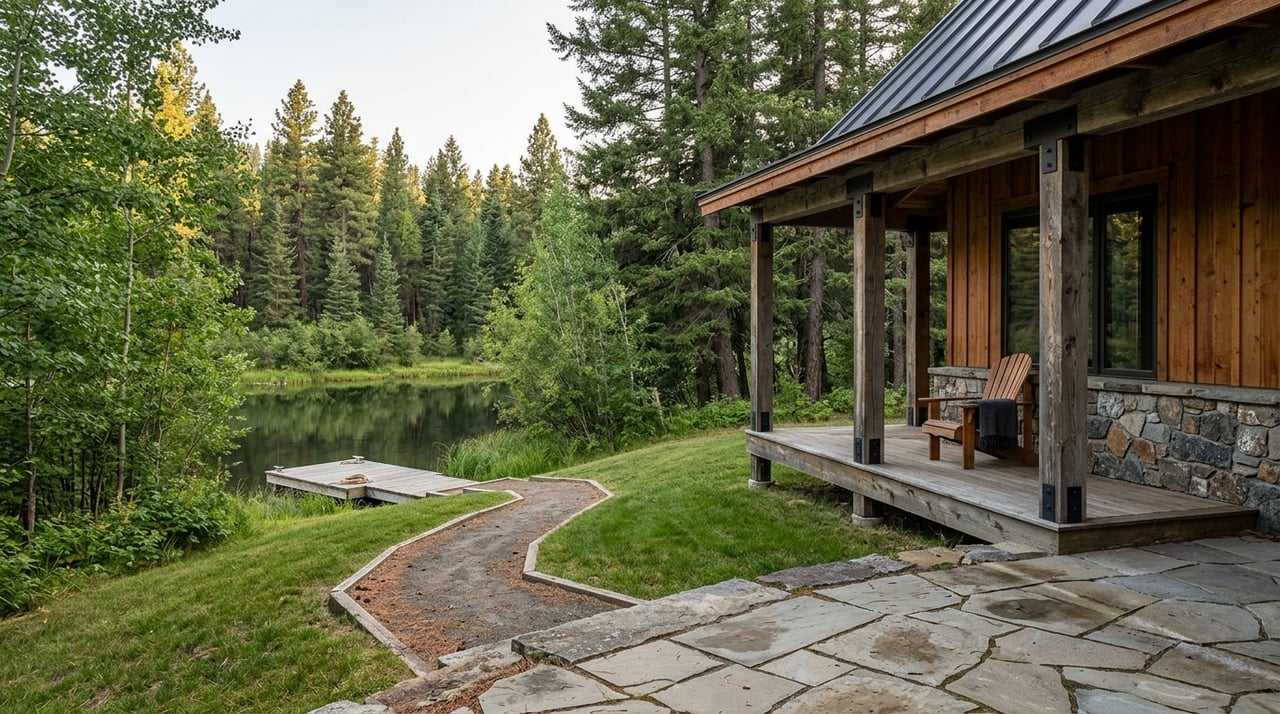
How Lake George Waterfront Access Shapes Home Value
June 18, 2026
June 18, 2026
If you are looking at homes in Lake George, “near the water” can mean very different things. A home with a reservoir view, a property with easy access to a launch, and a place near year-round river fishing may all appeal for different reasons, but they do not shape value in the same way. Understanding that difference can help you buy smarter, price more accurately, and see what really matters in this recreation-driven market. Let’s dive in.
Lake George is not a typical lakefront town. It is a small Park County community at about 8,000 feet, roughly 45 miles from Colorado Springs, and the area’s economy is supported in part by seasonal visitors heading to Elevenmile Canyon and nearby state parks.
That matters because in Lake George, water access is closely tied to how people actually live and recreate. For many buyers, the draw is not only scenery. It is the chance to fish, boat, camp, or reach the river easily from home.
Park County also notes that this is a high-elevation climate where snow is possible in every month, and winter can begin in late September and last until May. So when buyers think about water access here, they are also thinking about seasonality, road conditions, and how often that access is truly usable.
A useful way to think about water-related value is to break it into three categories: adjacency, access, and view. In simple terms, what you can do with the water usually matters more than simply being able to see it.
Broad real estate research supports a practical hierarchy. Properties with true shoreline access tend to command the strongest premium, followed by homes with meaningful shared or deeded access, then homes with walkable or short-drive access to a launch or river entry, and finally homes with water views only.
That does not mean a view has no value. It does. But in most markets, a scenic water view is usually priced differently than direct, usable access.
In Lake George, the strongest value story is often tied to usable recreation. A home may stand out more if nearby water can be reached easily, legally, and consistently for fishing, boating, or day-to-day enjoyment.
That is especially important because nearby water resources are managed differently. Some have boat ramps, some have seasonal limitations, and some are best known for year-round fishing rather than boating.
For buyers and sellers alike, the key question is often this: What can you actually do from this property or within a short drive?
Eleven Mile State Park is one of the biggest water-based draws near Lake George. Colorado Parks and Wildlife says the reservoir has 3,405 surface acres, 326 campsites, three boat ramps, and a reputation for outstanding fishing.
That scale matters for home value because it creates a major regional recreation anchor. Buyers shopping in Lake George often recognize Eleven Mile as a destination for boating, fishing, and outdoor time, which can strengthen interest in homes that make those activities easier to enjoy.
There is also a practical side. Eleven Mile has specific ramps and mandatory inspections, and it is one of seven reservoirs that provide drinking water for Denver. That combination of strong amenity appeal and managed use can support demand, while also reminding buyers that access is defined by rules, infrastructure, and reservoir operations.
In Lake George, value is not only about reservoir proximity. The South Platte River in Eleven Mile Canyon adds another layer, especially for buyers who prioritize fishing.
The recreation area below Eleven Mile Dam offers year-round access, and Colorado Parks and Wildlife identifies this stretch as a quality-waters location with year-round catch-and-release fishing. Multiple access points from Lake George via County Road 96 make the river an important part of the area’s outdoor appeal.
That means a property can benefit from water-related demand even if it is not anywhere close to lakefront. For some buyers, quick access to trusted river fishing may matter more than a distant reservoir view.
Lake George buyers often look beyond one single body of water. Several nearby options can shape how a property is perceived.
Spinney Mountain State Park includes a 2,444 surface-acre reservoir in an alpine setting and is known for trout fishing. But current conditions matter here, because Colorado Parks and Wildlife notes that low water levels can limit recreation to hand-launched use.
That is a good example of why buyers should look past the map. Being “near Spinney” may sound appealing, but the actual experience can change based on water levels and launch conditions.
Tarryall Reservoir SWA includes 711 land acres and 175 water acres with hunting, fishing, camping, and seasonal boating. Access also comes with specific requirements, since most visitors age 16 and older need a hunting or fishing license or an SWA pass.
For some buyers, that is still a strong recreational plus. But it also shows why value is tied to practical, legal access rather than broad assumptions about nearby water.
National waterfront research consistently points to scarcity as a major reason water-adjacent homes can command stronger prices. In general, buyers pay the most for true waterfront, meaning the water can be reached directly from the property without leaving it.
That distinction matters in Lake George because many homes are not truly waterfront in the classic sense. Instead, their value may come from being close to a reservoir entrance, near a known fishing corridor, or positioned for a protected water-oriented view.
When direct shoreline access is limited, any property that offers a stronger connection to water can stand out more. That does not automatically create a set premium in Lake George, but it helps explain why some homes attract more attention than others.
A water view can absolutely shape buyer interest. Research cited in the report found water-view premiums in the 8% to 31% range in other markets, with stronger and more direct views typically performing better than partial or no-view properties.
In Lake George, views can be especially compelling because the landscape is part of the lifestyle. A home that looks toward open water, canyon terrain, or a protected recreation corridor may feel more private, more scenic, and more connected to the outdoor setting buyers want.
Still, a view is not the same as access. If two homes offer similar finishes and acreage, the one with easy legal recreation access may appeal to a different buyer pool than the one with scenery alone.
One of the biggest mistakes buyers make is assuming water access works the same way year-round. In Lake George, that is rarely the case.
The area’s high-elevation climate means long winters and changing conditions. Park County notes that winter can begin in late September and last into May, while local recreation managers also note winter service reductions in some areas and current launch limits in others.
That is why buyers often look closely at details such as:
A home’s relationship to water is more valuable when the use feels dependable and easy to understand.
If you are buying in Lake George, it helps to evaluate water access with a practical lens. Marketing language can sound similar from one listing to the next, but the real experience may be very different.
Focus on questions like these:
Those questions can help you compare properties more clearly and avoid overpaying for a feature that sounds stronger than it is.
If you are selling a home in Lake George, the best strategy is usually to be precise. Buyers respond well when you clearly explain not just that water is nearby, but how your property connects to it.
That might mean highlighting proximity to Eleven Mile State Park, access to year-round South Platte River fishing, or a protected view that adds to the home’s setting. It can also mean being upfront about seasonal realities, launch rules, and what the next owner can realistically enjoy.
Clear positioning builds trust. In a market like Lake George, buyers often pay attention to the difference between a nice description and a usable lifestyle benefit.
Lake George is a market where map distance does not tell the full story. Two homes may look similar online, yet one may offer much easier access to fishing, boating, or year-round recreation.
That is where local, boots-on-the-ground guidance becomes valuable. Understanding which water amenities buyers care about, how current access rules affect appeal, and how to frame those features in pricing or marketing can make a real difference.
If you are thinking about buying or selling in the Lake George area, Thetford Team Real Estate can help you evaluate what nearby lake and river access really means for your goals, your lifestyle, and your property value.
Stay up to date on the latest real estate trends.
Get assistance in determining current property value, crafting a competitive offer, writing and negotiating a contract, and much more. Contact us today.