A Smarter Guide to Divide CO Horse Property
July 2, 2026
July 2, 2026
Dreaming about a few acres in Divide where you can keep horses, spread out, and enjoy mountain living? It is an exciting goal, but it also comes with details that matter more here than they might in a typical neighborhood. If you want to buy smart, this guide will help you understand what to look for, what questions to ask, and how to think about daily life on a small acreage or horse property in Divide. Let’s dive in.
In Divide, “small acreage” can mean a wide range of property types. Recent listings show everything from lots under 1 acre to parcels around 40 acres, with many options falling between about 1 and 10 acres.
That range matters because not every large lot functions the same way. Some properties feel more like spacious residential lots with nearby utilities, while others are better suited for a true hobby-ranch setup with more room for animals, storage, and outdoor use.
Buyers in this niche often care about more than the house itself. Current listing trends point to strong interest in features like no HOA, wooded land, fenced areas, RV or boat parking, greenhouses, ponds, and large lots. In Divide, flexibility and usable land often carry as much value as interior finishes.
If you plan to keep horses in Teller County, parcel size is not just a preference. It is a legal and practical starting point.
In Teller County RR, R-1, and R-1M zoning districts, horses are treated as domestic hoofed livestock. They are not allowed on residential properties under 1 acre. On lots that are 1 acre or larger, the maximum density is one animal per one-half acre.
That means a small parcel may technically allow horses, but the setup can still feel tight depending on the shape of the land, slope, access, and where improvements can go. If you are shopping for a horse-friendly property, it helps to think beyond the total acreage number and focus on usable acreage.
Teller County also requires certain improvements when you keep multiple animals. If you keep two or more animals, a barn or shelter is required.
Corrals, stalls, and barns must be at least 50 feet from any property line. In RR zoning, the corral area also cannot exceed 10% of the gross lot acreage or one-half acre, whichever is less.
These rules can affect whether a property that looks perfect online actually works in real life. A lot may have enough acreage on paper, but the building envelope, setbacks, driveway placement, and terrain can limit where you can place a shelter or corral.
Two five-acre properties can live very differently. One may have easy access, a gentle building site, and plenty of room for a small barn and turnout area. Another may be heavily wooded, steeper, or laid out in a way that reduces functional space.
That is why it helps to review a property through a practical lens. You are not just buying acres. You are buying the ability to use those acres in a way that fits your goals.
Here are a few things to evaluate:
Some smaller Divide lots are utility-adjacent rather than fully remote. For example, recent listings have highlighted electricity at the lot line and water service through Rainbow Valley Water District, while others feature permitted wells. That can make a big difference in both setup costs and long-term convenience.
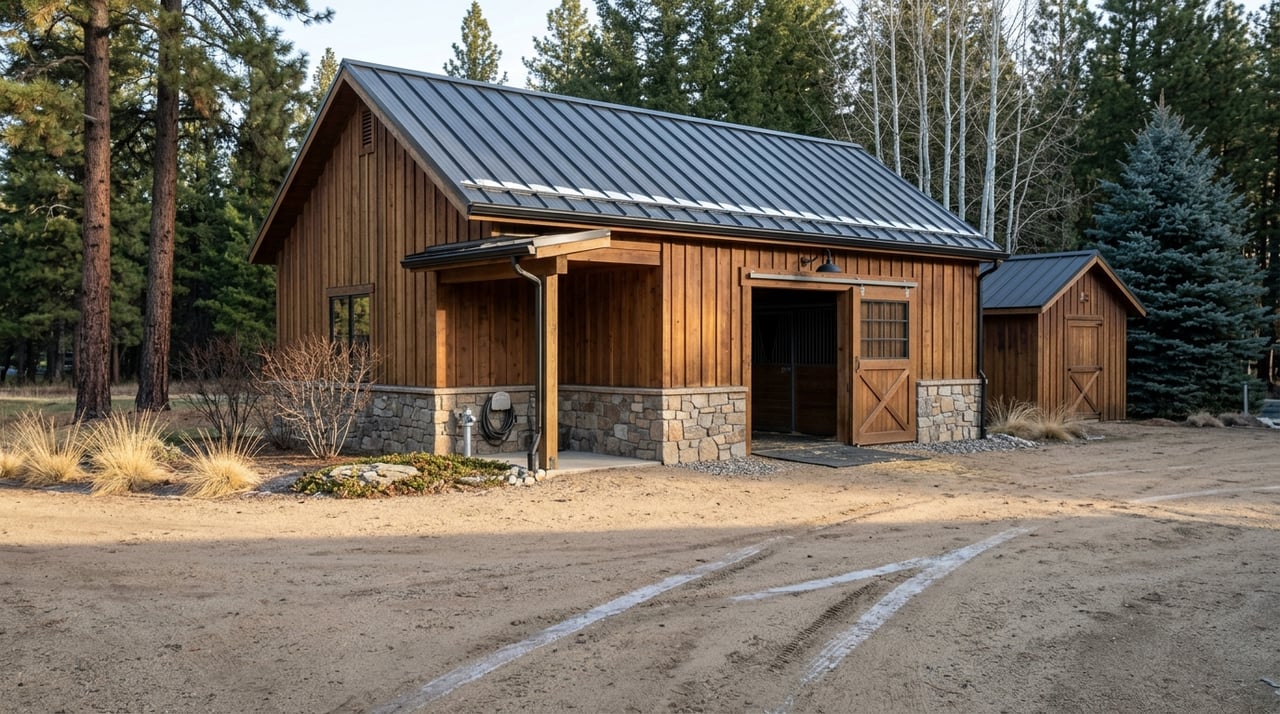
On a mountain acreage, outbuildings are often essential. You may want a run-in shed, tack room, hay storage, equipment space, or a detached shop. In Divide, those ideas should be part of your property search from the beginning, not an afterthought.
Teller County exempts some detached unheated accessory buildings under 200 square feet and certain agricultural buildings used only for qualifying agricultural purposes. Even so, setback rules still apply, and any electrical, mechanical, or plumbing work still needs permits.
The county also will not issue a building permit if zoning, subdivision, legal access, or sewage-disposal requirements are unresolved. In simple terms, that means your future barn or shed depends on more than just available space.
Before you buy, it is smart to ask:
These questions can save you time, money, and frustration later.
Owning acreage in Divide is not only about the view. It is also about maintenance.
Nearby climate data from the NOAA station at Florissant Fossil Bed, at 8,402 feet, shows an annual mean temperature of 40.3 degrees, annual precipitation of 14.97 inches, and annual snowfall of 58.9 inches. January averages 22.4 degrees, while July averages 60.2 degrees.
That points to cold winters, moderate summers, and a shorter growing season. For property owners, those conditions affect everything from snow removal and roof wear to muddy spring conditions and freeze-thaw stress on driveways and structures.
If you are considering horse property, year-round access matters even more. You need to think about feed deliveries, farrier visits, veterinary access, and keeping roads and driveways open during storms.
On small acreage, daily management has a direct effect on how well the property functions. Teller County’s zoning rules require regular manure removal, prohibit odor that extends beyond the property boundary, and require drainage to be managed so runoff does not carry contaminants onto neighboring properties.
Colorado State University Extension also recommends diverting clean water away from corrals and manure storage, preventing manure from reaching waterways, keeping manure and corrals at least 150 feet down-gradient from wells, and removing manure every few days to reduce flies, parasites, and odor.
In a mountain setting, snowmelt and drainage can turn a small oversight into a bigger issue. That is why it is important to think about where corrals, shelters, and manure storage will sit on the land before you buy.
In and around Divide, wildfire mitigation should be part of your long-term ownership plan. This applies to the house, barn, sheds, fencing, and storage buildings.
Colorado State Forest Service guidance recommends managing the home ignition zone in layers around each structure, including 0 to 5 feet, 5 to 30 feet, and 30 to 100 feet. For exterior improvements, the guidance also recommends a Class A roof, cleaned roofs and gutters, vent screening with 1/8-inch metal mesh, and replacing combustible fencing or gates within 5 feet of the home.
For acreage buyers, this means tree cover and privacy should be balanced with defensible space and access. A beautiful wooded lot can still be a great fit, but it should be evaluated with ongoing maintenance in mind.
One of the biggest lifestyle benefits of owning a small acreage or horse property in Divide is access to nearby recreation. This is one reason the area appeals to buyers who want a blend of mountain living and outdoor use.
Mueller State Park, located in Divide, offers more than 44 miles of trails. Most are open to hikers, mountain bikers, and equestrians, and the park includes horse-trailer parking and unloading, two equestrian campsites, and equine rest-stop infrastructure.
That gives local horse owners a meaningful nearby amenity for day rides and outings. It also reinforces that Divide functions well as a recreation-oriented horse market, even if it is not a deep ranch market.
Not every nearby route works the same way. The Crags Trailhead south of Divide includes a 2.5-mile trail open to foot traffic, horses, and cross-country skiing, but Forest System Road 383 closes from December 1 to June 1 each year.
The Continental Divide Trail is primarily intended for hiking and horseback riding, though some segments also allow other uses. In the North Divide area, some nearby public-land routes are motorized OHV networks, so it is important to verify whether a route is horse-friendly, motorized, or seasonally closed before you count on direct riding access.
Divide often reads as a hybrid lifestyle market. Some parcels are smaller, utility-served, and closer to a neighborhood feel. Others offer more room for animals, storage, and a wider rural footprint.
That makes the area appealing if you want horses as part of your lifestyle rather than a full-scale ranch operation. It can also be a good fit if you value privacy, recreation, and flexible outdoor use while still wanting practical access to surrounding mountain communities.
For many buyers, the best property is not the one with the most acres. It is the one where zoning, access, improvements, and daily upkeep all line up with how you actually want to live.
If you are starting your search, focus on matching the property to your intended use. A beautiful home on acreage is only part of the picture.
Use this simple checklist as you compare options:
A strong acreage purchase usually comes down to the details. When those details fit your goals, small acreage in Divide can offer a very rewarding mix of space, recreation, and mountain living.
If you are considering a small acreage or horse property in Divide, working with a local team that understands land, access, and mountain property nuances can make the process much smoother. Thetford Team Real Estate can help you evaluate properties, compare options, and plan your next move with local insight.
Stay up to date on the latest real estate trends.
Get assistance in determining current property value, crafting a competitive offer, writing and negotiating a contract, and much more. Contact us today.