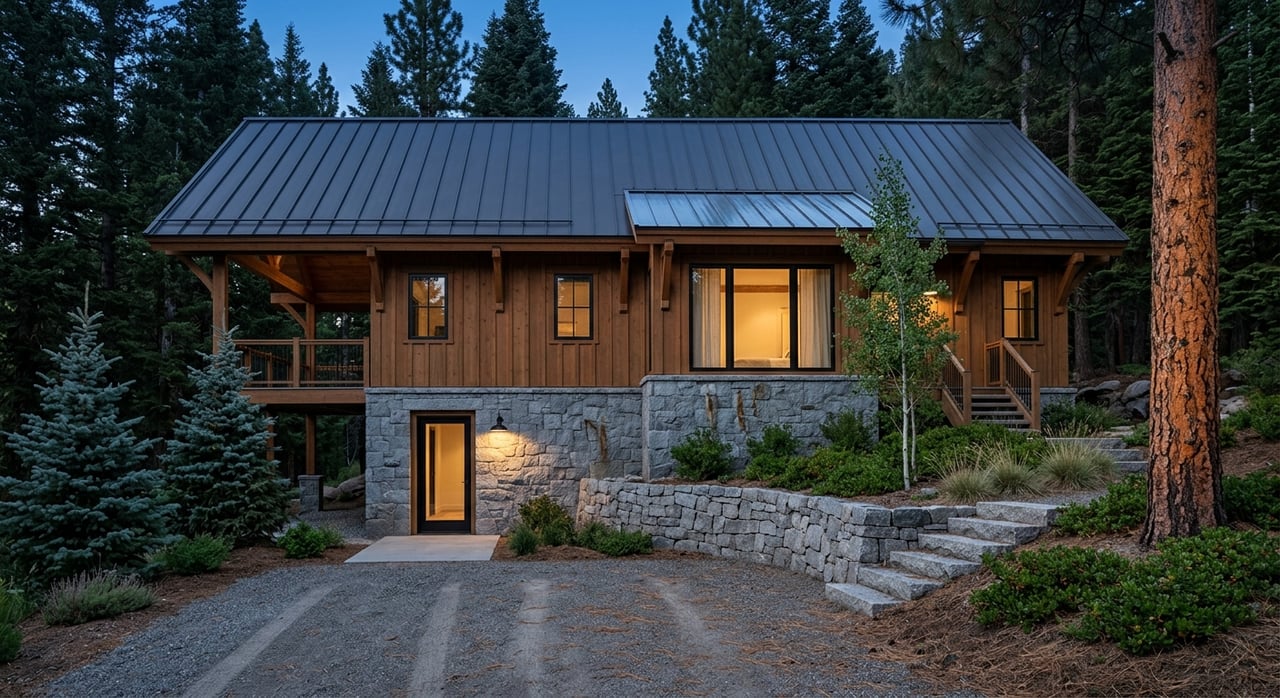
Should You Invest in Cripple Creek Real Estate?
April 2, 2026
April 2, 2026
Wondering whether Cripple Creek is a smart place to put your money? That is a fair question, especially in a mountain market that looks very different from a typical suburb or large rental hub. If you are considering a second home, long-term rental, or mountain property with income potential, this guide will help you weigh the opportunity, the tradeoffs, and the local realities that matter most. Let’s dive in.
Cripple Creek has a real investment story, but it is a niche one. This is not a broad commuter market driven by office jobs and steady suburban expansion. Instead, it is a tourism-and-gaming economy with a limited housing supply and a distinct historic downtown.
According to the City of Cripple Creek Heritage Tourism department, the city actively works to attract overnight visitors and connect them to casinos, retail, and local attractions. The same source notes there are ten casinos along historic Bennett Avenue, and the official tourism identity is closely tied to the city’s National Historic Landmark district.
That matters if you are thinking like an investor. A market built around tourism can create steady demand for lodging, workforce housing, and certain types of rentals, but it can also be more sensitive to shifts in visitor activity and gaming performance.
Housing demand in Cripple Creek is closely tied to employment and tourism. The city’s 2025 comprehensive plan says more than 70% of local jobs are in leisure and hospitality, and it also reports that 1,405 workers commute into town while only 194 residents both live and work there. That tells you something important: many people work in Cripple Creek, but not all of them live there.
For investors, that can support demand for long-term rentals and workforce-oriented housing. At the same time, it also means demand is concentrated in a narrower economic base than you would see in a more diverse market.
The tourism side still appears to have momentum. The city’s 2023 annual report says lodging taxes rose 4% as tourism and gaming visits rebounded, and the Colorado gaming revenue forecast cited in local reporting points to continued growth helped by the Chamonix Casino Hotel completed in July 2025.
One of the strongest arguments for Cripple Creek real estate is limited supply. The city planning area is small, and the surrounding terrain naturally restricts expansion. The community master plan says the area is about 1.1 square miles plus surrounding hillsides, with very little growth expected outside current boundaries.
New housing has also been limited. The same community master plan says most residential construction in the prior decade consisted of detached single-family homes, averaging only 5 to 6 permits per year.
That kind of low inventory can support values over time, especially in a place with tourism activity and a defined historic identity. It also helps explain why the city is looking at more attainable housing options, including ADUs and employee housing.
If you are shopping today, you are entering a market with options, but not a fast-moving one. Realtor.com’s Cripple Creek market overview shows a median listing price of $369,000, 137 homes for sale, a sale-to-list ratio of 92%, and a median 107 days on market. It currently classifies Cripple Creek as a buyer’s market.
That gives buyers more room to negotiate than they might expect in some Colorado mountain towns. It also means you should not assume a quick resale if your plan depends on fast appreciation or a short hold.
Home values also show some softness in the near term. Zillow reports the average Cripple Creek home value at $319,038, down 4.2% over the past year. In plain terms, this is a market where patience matters.
If your goal is cash flow, Cripple Creek deserves a sober review. Zillow reports an average rent of $1,250, while Realtor.com also shows a median rent of $1,250. That consistency suggests the rental market is thin, but the available data lines up reasonably well.
Using that $1,250 monthly rent against Realtor.com’s $369,000 median listing price produces a simple gross annual yield of about 4.1% before expenses. Using Zillow’s $319,038 average home value gives a simple gross yield closer to 4.7%.
Those numbers are not terrible, but they are not a high-yield slam dunk either. If you want a straightforward, passive long-term rental with strong liquidity, Cripple Creek may not check every box.
Not every part of Cripple Creek performs the same way. The city center and the outlying mountain neighborhoods are different products with different buyer pools and different rent-to-price dynamics.
Realtor.com market data shows city-center listings often in the roughly $334,000 to $399,000 range, while Cripple Creek Mountain Estates carries a higher median home price of $498,000. That higher price point does not automatically mean worse returns.
In fact, one Zillow-listed example in Cripple Creek Mountain Estates sold for $422,500 with a Zillow-estimated rent of $2,218 per month. That implies a rough gross yield of about 6.3% on that specific property. It is only one example, but it shows why newer mountain homes outside the historic core can sometimes perform better on a rent-to-price basis.
Before you buy, it helps to understand that Cripple Creek is not one uniform market. Broadly speaking, you are often choosing between two very different styles of investment.
Downtown and near-downtown homes can appeal to buyers who want walkable access to the city’s historic setting and visitor attractions. These properties may also offer charm that is hard to replicate elsewhere.
The tradeoff is that historic-district rules can affect what you can change. The city’s master plan emphasizes preserving downtown character, maintaining historic guidelines, and encouraging infill that fits the existing district.
Homes outside the core may offer newer construction, more space, and layouts that better fit year-round mountain living. In some cases, they may also produce stronger rental numbers than older downtown housing.
The tradeoff here is exposure to mountain-specific conditions. Homes farther from downtown may face more risk from wildfire, road disruptions, and utility interruptions, based on the Teller County wildfire plan.
Cripple Creek can reward local knowledge, which is one reason careful due diligence matters here. If you are considering a short-term rental, you need to understand the licensing rules before you buy.
The city says short-term rentals inside city limits must be licensed, and it uses a strict proximity enforcement policy. It also requires a business license for all businesses operating inside city limits, with annual fees of $150 for a new license, $75 for the second year, and $25 thereafter, according to the city’s business licensing and short-term rental page.
If you are looking at an older home in the historic district, renovation flexibility may be more limited than in newer subdivisions. Approval timelines, exterior changes, and design compatibility can all shape your budget and timeline.
Every investment market has risk, and in Cripple Creek the risks are fairly clear.
The city’s economy is heavily tied to gaming and tourism. The 2023 annual report says device fees are the city’s largest revenue source and gaming taxes are the second largest. The same report notes device counts were still 22% below pre-pandemic levels, and gaming-tax distributions fell 13.2% because of SB22-216.
That does not erase the market’s strengths, but it does mean local demand is tied to a concentrated economic engine. If gaming slows, real estate demand could feel it.
With 137 homes for sale and a median 107 days on market, resale is not especially fast right now. You should underwrite for a patient exit, not a quick flip.
Owning in a mountain environment often means planning for more maintenance, weather-related wear, insurance considerations, and infrastructure issues. Those costs can affect your real return, especially outside the downtown core.
For the right buyer, yes. But it is smart in a specific way, not in an easy, one-size-fits-all way.
Cripple Creek makes the most sense if you are comfortable with a niche mountain market, modest gross yields, tourism-linked demand, and a slower resale environment. It can be especially appealing if you value limited supply, want exposure to a destination-oriented town, and are willing to study the difference between downtown historic homes and outlying mountain properties.
It may be less attractive if you want a highly liquid rental market, broad job diversification, or simple passive cash flow from day one. In short, Cripple Creek can be a smart mountain investment, but usually for buyers who are patient, selective, and realistic about the numbers.
If you are thinking about buying in Cripple Creek, working with a team that understands mountain property, local constraints, and neighborhood-level differences can make a big difference. Thetford Team Real Estate can help you evaluate homes, land, and investment potential with practical local guidance.
Stay up to date on the latest real estate trends.


Get assistance in determining current property value, crafting a competitive offer, writing and negotiating a contract, and much more. Contact us today.