In Manitou Springs, It's the Address That's Historic, Not Just the House
September 3, 2026
September 3, 2026
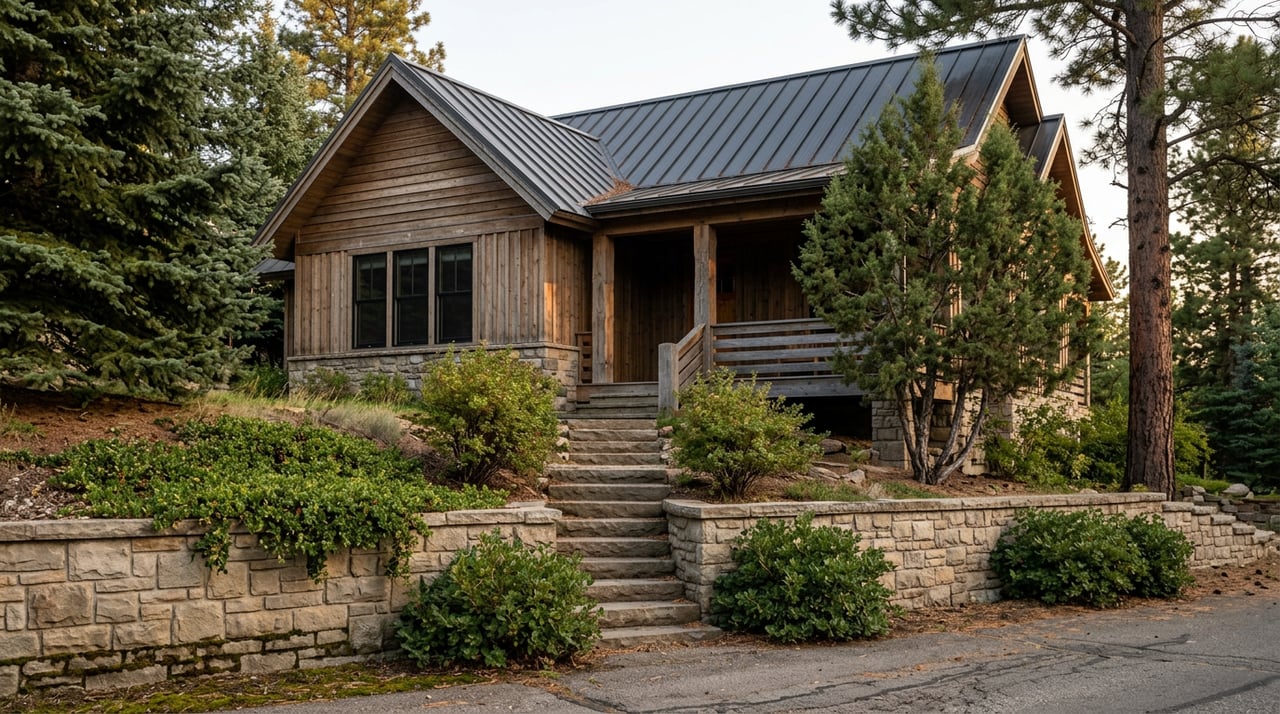
Drive through Manitou Springs and the postcard image is easy to spot: gingerbread trim, wraparound porches, a red sandstone inn tucked against Red Mountain. What's harder to see from the street is where the town's historic preservation rules actually start and stop. They don't follow the architecture. They follow a boundary line that runs through 16 separate sub-districts, according to Manitou Springs' historic district materials, and a plain 1920s frame cottage two streets off Manitou Avenue can fall under exactly the same review as the ornate Queen Anne next to it, according to the Manitou Springs Historic District entry on Wikipedia.
That distinction matters more than most buyers realize until they're standing on a ladder with a new exterior door, wondering why a neighbor mentioned a permit they've never heard of.
Most people shopping for an older home here assume the historic rules apply to the obvious cases: the painted ladies, the stone High style houses that became bed and breakfasts, the buildings that show up on postcards. The city's own planning documents tell a different story. The Historic Preservation District's 16 sub-districts contain a mix of historic and contemporary infill, and some of those areas are eclectic rather than cohesive in style or construction date. A house built well into the 20th century can sit inside a sub-district boundary just as easily as a 19th-century original, and if it does, the same exterior review applies.
That's the piece that catches buyers off guard. The trigger isn't how old or ornate the house looks. It's whether the parcel falls inside one of those sub-district lines, something a buyer usually has to check on the city's own historic sub-districts map rather than guess from curb appeal.
"If it requires a tool, it probably needs a PIP in Manitou Springs."
That's the city's own shorthand for how broad the permitting net is, and it's not limited to historic properties. A Property Improvement Permit, according to the Manitou Springs Permits & Inspections page, is required before almost any interior or exterior remodeling project in Manitou Springs can move to the county building department. Inside a historic sub-district, that same PIP process is also where the city determines whether your project needs a separate look from the Historic Preservation Commission.
The process runs in a specific order, and skipping a step is how projects stall.
| Step | Who Reviews It | What It Covers |
|---|---|---|
| Property Improvement Permit (PIP) | Manitou Springs Planning Department | Required first, for nearly any project that touches the exterior or structure of the home |
| Historic Preservation Commission review | According to the Manitou Springs Historic Preservation Commission page, 7 resident commissioners plus up to 3 alternates are appointed by City Council | Exterior alterations, if the property sits inside one of the 16 local historic sub-districts |
| PPRBD Building Permit | Pikes Peak Regional Building Department | Structural and code compliance, issued after the city's Property Improvement Permit is in hand |
The commission can approve, conditionally approve, or deny a proposed change outright. Its members serve four-year terms and have to be Manitou Springs residents who aren't city employees, council members, or related to either group. If a homeowner disagrees with a decision, the appeal goes to City Council.
None of this is new. The commission has been reviewing changes in the district since 1979, the historic district itself was formally established the following year, and the whole area was added to the National Register of Historic Places in 1983. What's changed is how much of the town that boundary now covers, since the sub-district system was built specifically to let the commission apply different standards to different pockets of the community rather than treat the whole district as one uniform style.
Here's a piece of the picture that rarely comes up before closing. Manitou Springs runs a mini-grant program, named for former Historic Preservation Commissioner Vicky Bunsen Doucette, that helps offset the cost of maintaining or rehabilitating a contributing property inside the historic district. The grant covers up to 75 percent of qualifying project costs, capped at $2,000 per property per year, with the owner covering the balance.
Two details make this different from a typical rebate. First, it's reimbursement-based, so no work can begin before the grant is formally approved. Second, applicants have to schedule a pre-submission meeting with the Planning Department before they apply, since staff use that meeting to confirm the project actually qualifies and to help determine the award amount. Projects have two years to wrap up unless an extension is granted, and the final payment doesn't go out until the city has reviewed receipts and signed off on the finished work.
For a buyer weighing whether an older Manitou Springs home is worth the renovation list, that grant is worth asking about before assuming the full cost falls on the new owner.
This is the part that makes 2026 a specific moment to buy carefully rather than rely on last year's understanding of the district. Earlier this year, the City Administrator Weekly Report noted that the Planning Department was working with the Historic Preservation Commission to update Title 17, the chapter of municipal code that governs historic preservation, and was separately completing a historic inventory of the Log Cabin Historic District, one of the 16 sub-districts.
That inventory work matters because it's the kind of survey that can reshape which structures are treated as contributing to the district's historic character going forward. A buyer who pulls up a five-year-old blog post about Manitou Springs historic rules, or even a listing description written last year, may be reading a snapshot of a code that's mid-revision. The safer move is a direct check with the Planning Department before assuming any renovation plan is a sure thing.
One more piece of context is worth understanding before you anchor to a number from a portal search. Different data providers show sharply different figures for Manitou Springs right now. Movoto listed the town's median sale price at $724,999 for April 2026, while its own August 2026 read on active listings showed a $599,000 median asking price, a different measure entirely. Zillow's home value index puts the typical home value at $548,503, down 2.5 percent from a year earlier. Redfin's most recent monthly figure shows a median sale price of $736,000, up 12.3 percent year over year. Orchard's most recent 30-day window recorded a median of $817,000, up 65.1 percent year over year, built on just three closed sales.
That spread, from the mid-$500,000s to over $800,000 depending on the source and the week, isn't a sign that the data is wrong. It's a sign that Manitou Springs sells so few homes in a typical month that any single median is easily skewed by which three or four properties happened to close. In a market this thin, the number that should worry a buyer more than a headline median is whether the specific house they're considering sits inside a historic sub-district, and what that means for the work they're planning to do after closing.
My house isn't a Victorian. Could it still be inside the historic district? Yes. The 16 sub-districts include a mix of historic and later infill construction, and the review requirement follows the property's location inside the district boundary, not the age or style of the specific structure.
Is the mini-grant only for major restoration projects? No. It's designed for maintenance and rehabilitation work that preserves a contributing property's historic integrity, and the $2,000 annual cap keeps it scaled toward smaller projects rather than full renovations.
If you're looking at an older home in Manitou Springs and want to know before you write an offer whether a specific property sits inside a historic sub-district, what that means for your renovation plans, or how the district's boundaries might shift as this year's Title 17 update moves forward, that's exactly the kind of homework Thetford Team Real Estate does with buyers every week. Get your free home valuation or start your property search, and let's talk about your move.
This article is general information, not legal, tax or financial advice. Consult a qualified professional about your situation.
Stay up to date on the latest real estate trends.


Get assistance in determining current property value, crafting a competitive offer, writing and negotiating a contract, and much more. Contact us today.